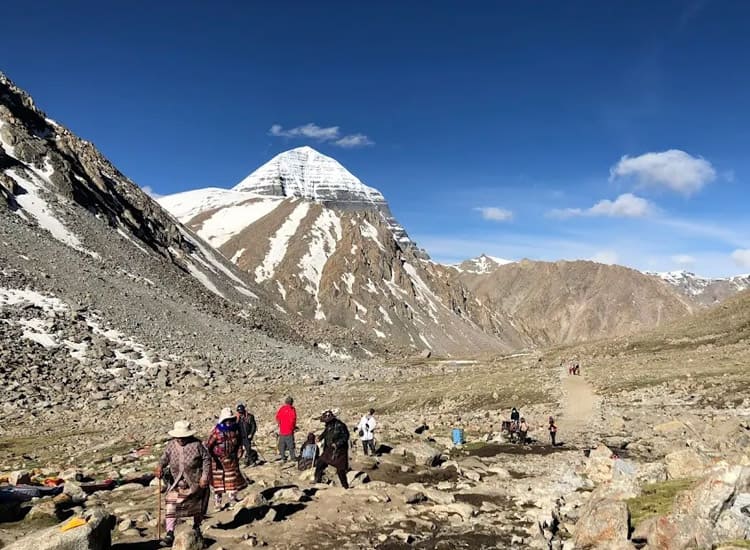


The journey to Kailash Mansarovar has never been merely about distance—it is a deeply spiritual passage that transcends physical endurance, drawing seekers from across the world to the abode of Lord Shiva. For decades, Indian pilgrims have undertaken this sacred yatra with unwavering devotion, navigating high altitudes, unpredictable terrains, and logistical complexities for a glimpse of the divine.
In 2026, however, the pilgrimage stands at a pivotal crossroads. A significant price revision mandated by the Government of China has redefined the economics of the Yatra, transforming it from a challenging spiritual expedition into a more structured, premium, and tightly regulated experience. This shift is not merely financial—it signals a broader evolution in how the Kailash Mansarovar Yatra will be accessed, managed, and experienced in the years ahead.
Revised Cost Structure
China Side (Uniform Increase):
Nepal Side Adjustments:
Additional Cost Consideration
A proposed centralized kitchen system may soon be implemented:
This would further elevate the total cost of the Yatra, especially for helicopter-based itineraries.
The increase is rooted in a combination of geopolitical, operational, and administrative factors rather than a single policy change.
Access to Tibet remains one of the most tightly regulated in the world. The 2026 revisions indicate:
These changes are aimed at maintaining stricter oversight of all pilgrimage movements within the Tibetan Autonomous Region.
Ongoing geopolitical tensions, particularly in global transit corridors, have resulted in:
These cascading costs have directly impacted the feasibility of operating previous pricing models.
During spiritually significant periods like the Saga Dawa Festival, the Chinese authorities have imposed strict limitations:
This restriction not only limits availability but also intensifies demand-driven pricing.
Pilgrims can expect an overall hike ranging from:
This elevates the Yatra into a more premium category, especially for helicopter routes.
The rising costs are naturally leading to:
The Yatra is increasingly aligning with the concept of luxury spiritual travel, where comfort and precision planning are prioritized alongside devotion.
Tour operators are now required to:
Undercutting prices or bypassing official structures may result in:
The 2026 price hike reflects a broader transition of the Yatra into a highly controlled, capacity-managed spiritual expedition.
This shift is driven by:
In essence, the Yatra is moving away from volume-based travel towards quality-driven, regulated access.
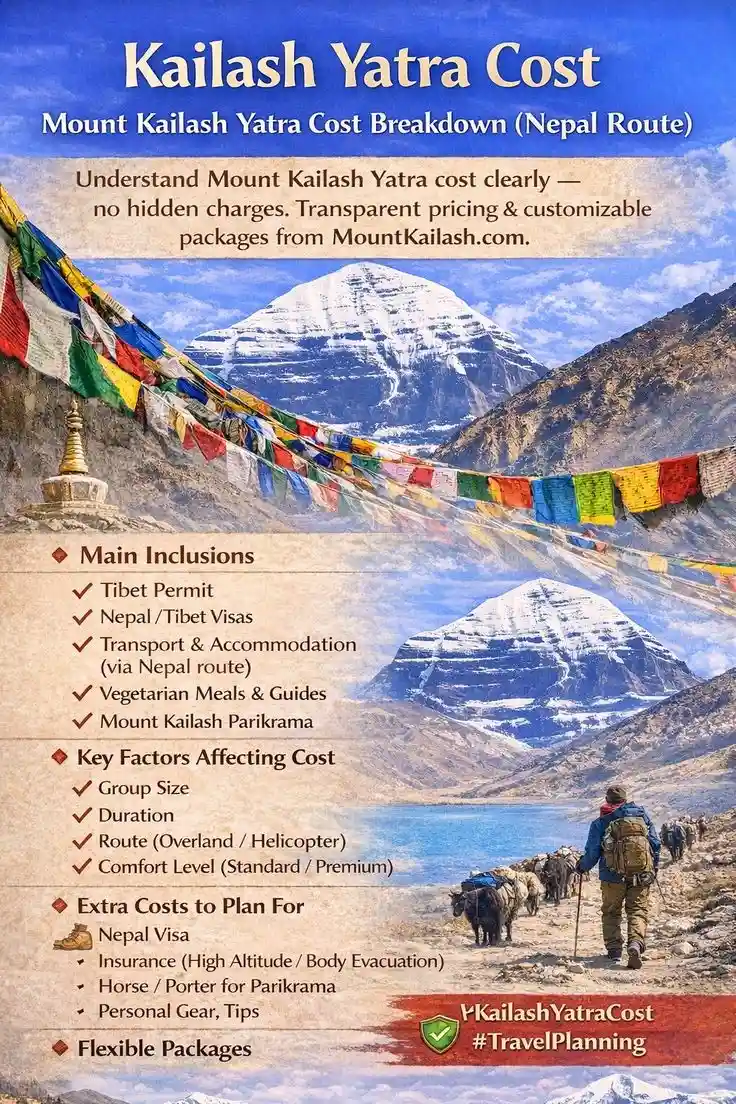
For those planning their journey in 2026:
The price hike introduced for the 2026 Kailash Mansarovar Yatra is not just a cost revision—it is a reflection of a changing paradigm in sacred travel. While it may make the journey more exclusive, it also promises a more organized, secure, and refined experience for those who undertake it.
As pilgrims continue to seek blessings at Mount Kailash, the journey itself is being reshaped into one that demands greater intention, preparedness, and commitment.
In this new era, the path to Kailash remains as sacred as ever—but it is now defined by structure, sustainability, and a renewed sense of purpose.